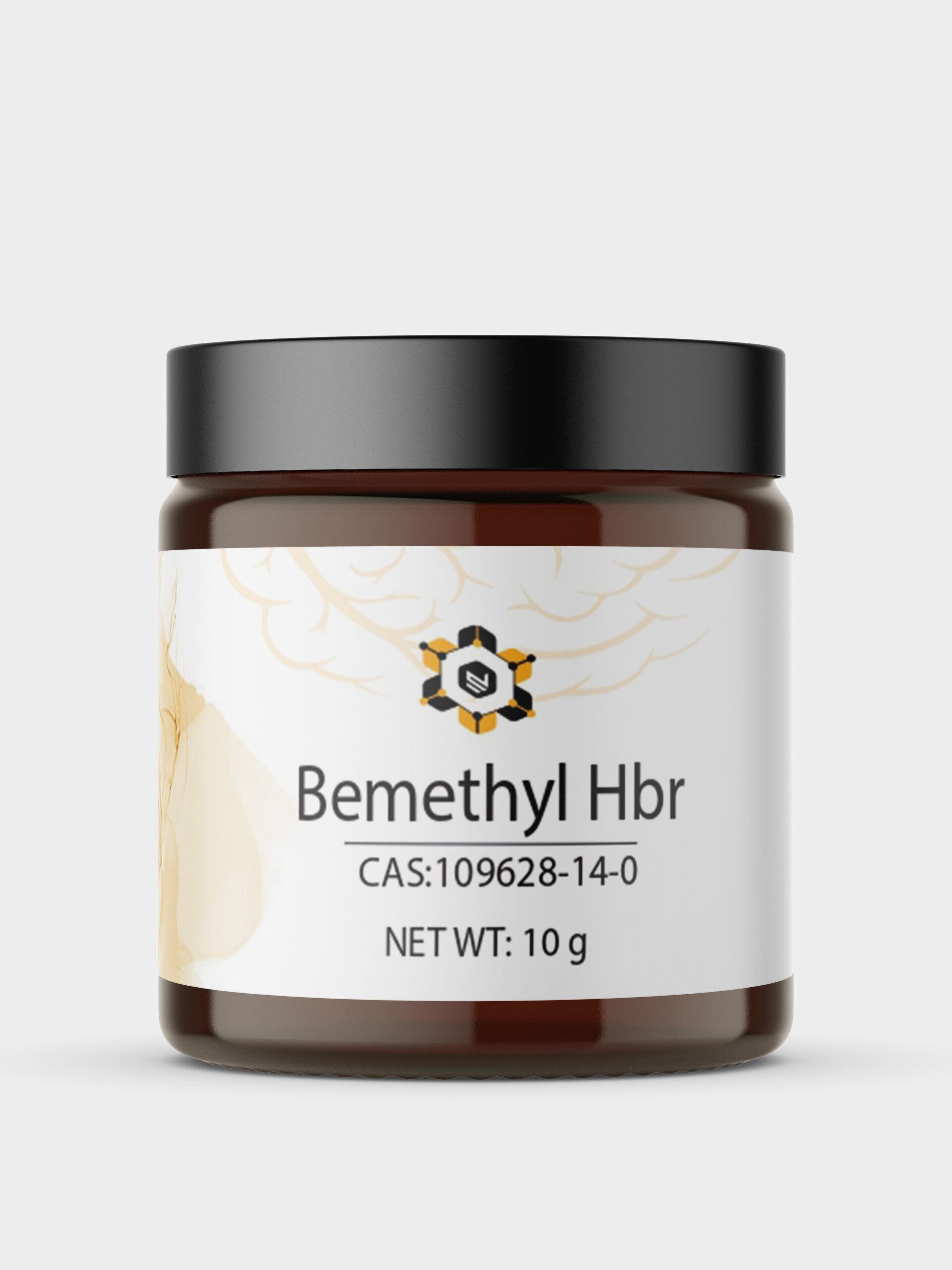


Bemethyl HBr
From €94.80
Bemethyl HBr, often referred to as bemetil, is a synthetic benzimidazole compound studied as an actoprotector — researchers have investigated how it might help cells maintain normal function under metabolic stress, such as low oxygen or heavy exertion.
For a more detailed description and lab analysis, please see the sections below.
In stock
Worldwide Delivery: We ship to most international destinations with tracked services.
Bemethyl HBr: Actoprotector & Antihypoxant Research Compound
Overview: A Stress-Resistance Compound from Soviet Pharmacology Research
Most performance-related compounds work by pushing the nervous system harder — more adrenaline, more stimulation, more “go.” Bemethyl HBr is scientifically interesting precisely because it doesn’t fit that mold, often being compared to the nootropic class of compounds and other nootropic powders. Developed in the 1970s by a Soviet military pharmacology program, it kicked off an entire research category — actoprotectors (compounds studied for helping the body resist physical and metabolic stress without acting like a stimulant) — that still shows up in stress-physiology literature today. For anyone getting into pharmacology or biochemistry research, it’s a genuinely useful compound to understand, because its proposed mechanisms touch on gene expression, mitochondrial function, and antioxidant biology all at once.
The Big Picture: Bemethyl HBr, often referred to as bemetil, is a synthetic benzimidazole compound studied as an actoprotector — researchers have investigated how it might help cells maintain normal function under metabolic stress, such as low oxygen or heavy exertion. It’s supplied here strictly for laboratory research use, not for human consumption.
Quick Reference: Chemical Identity & Handling Specifications
| Attribute | Detail |
|---|---|
| Common Name | Bemethyl HBr (also called Bemitil, Bemactor, Metaprot in the literature) |
| Chemical Class | Benzimidazole derivative (2-ethylsulfanyl-1h-benzimidazole;hydrobromide), also known as 2-ethylthiobenzimidazole hydrobromide, formulated as a hydrobromide salt |
| Research Classification | Actoprotector / antihypoxant — studied for cellular stress-resistance mechanisms |
| Appearance | White to off-white crystalline powder (molecular formula C9H11BrN2S; molar mass 259.17 g/mol) |
| Storage Goal | Cool, dry, light-protected conditions (refrigerated, desiccated) to preserve chemical stability |
Mechanism of Action: Cellular Stress-Resistance Pathways
Gene Expression & Protein Synthesis Activation
The macro picture: In laboratory studies, tissues exposed to bemethyl have shown increased production of RNA and proteins in different organs and tissues, reflecting activation of the cell genome and a positive modulating effect on protein synthesis.
The micro explanation: Think of a cell’s DNA as a reference library that never leaves the building — you can’t check out the original books. To actually use the information, the cell makes RNA (a working photocopy of the instructions) and then uses that copy to build proteins (the actual tools and machinery that do the cell’s work). Bemethyl appears to speed up this copy-and-build process, essentially getting the cell’s “print shop” running at a higher output during periods of stress.
Antihypoxant Activity: Oxygen-Efficient Energy Production
The macro picture: Bemethyl is classified as an antihypoxant — a compound studied for combating conditions of hypoxia (a state where tissues aren’t getting enough oxygen).
The micro explanation: Mitochondria (the tiny structures inside cells that generate usable energy via mitochondrial enzyme activity, often nicknamed the cell’s “power plant”) normally need a steady oxygen supply to keep energy production running smoothly. When oxygen gets scarce — high altitude, intense exertion, restricted blood flow — that power plant starts to sputter. Antihypoxants are studied for whether they help cells keep producing usable energy even when the oxygen supply drops, similar to a generator switching to a backup fuel source when the main line gets interrupted.
Antioxidant Activity: Reactive Oxygen Species Management
The macro picture: Bemethyl is also studied for antioxidant and antimutagenic properties (antimutagenic meaning it’s investigated for whether it helps protect DNA from damage that could cause mutations).
The micro explanation: Every cell’s energy-production process throws off byproducts called reactive oxygen species — unstable, reactive molecules, a bit like exhaust fumes from an engine, that can damage proteins, fats, and DNA if they build up. Cells have their own cleanup crews (enzymes like superoxide dismutase and catalase) to neutralize this exhaust. Under heavy metabolic stress, that exhaust builds up faster than normal. Part of the actoprotector research interest is in whether bemethyl helps support or reinforce that internal cleanup system rather than acting as a cleanup agent itself.
Carbohydrate & Glycogen Metabolism Regulation
The macro picture: Beyond gene expression, oxygen efficiency, and antioxidant activity, bemethyl has also been studied for its effects on how cells store and release energy from carbohydrates. Research on bemithyl’s effects examined glycogen content and the activity of glycogen synthase, glycogen phosphorylase, and glucose-6-phosphatase in liver tissue — the three enzymes primarily responsible for building up, breaking down, and releasing stored sugar.
The micro explanation: Glycogen is essentially the body’s fuel tank — a stored, compact form of glucose (sugar) that tissues can draw on when energy demand spikes. Building that fuel tank up (via glycogen synthase) and drawing it back down (via glycogen phosphorylase and glucose-6-phosphatase) has to be tightly regulated, or cells either run out of accessible fuel too fast or fail to release it when it’s needed. This is part of why bemethyl shows up in metabolic-stress research specifically — it sits at an intersection of energy storage, energy release, and oxygen efficiency rather than affecting just one system in isolation.
Comparative Context: Bemethyl Within the Actoprotector Compound Class
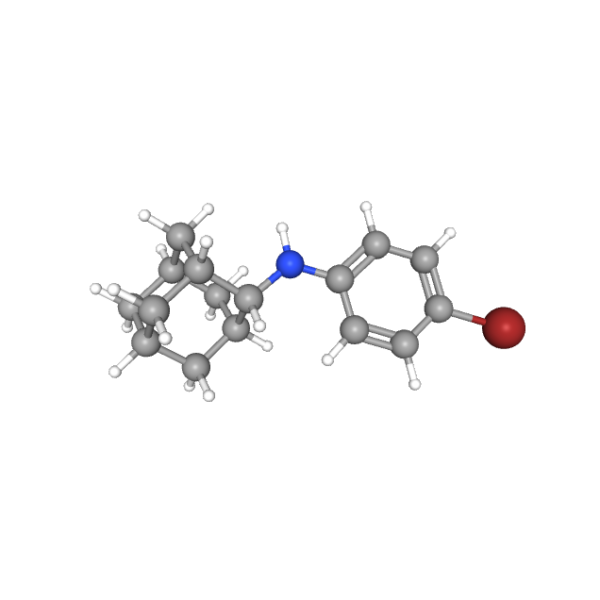
Bemethyl is often described as the “reference compound” for actoprotectors, but it’s not the only one, and understanding its neighbors helps clarify what makes it distinct. Other synthetic adaptogens investigated for enhancing physical performance include bromantane, dibazol (bendazol), levamisole, and afobazol — all of them, notably, sharing structural similarities as benzimidazole or adamantane-based compounds. Of these, bromantane became the other major practically-used actoprotector alongside bemethyl, though the two differ in their proposed emphasis: bemethyl’s literature leans heavily on gene expression and antihypoxic effects, while bromantane’s research history leans more toward central nervous system modulation. For a student getting oriented in this space, bemethyl is a useful anchor point precisely because so much of the foundational actoprotector research was built around it first.
Analytical Chemistry: Metabolism, Pharmacokinetics & Detection Methods
One detail that matters a lot for researchers specifically, as opposed to a general audience, is the pharmacokinetics of how bemethyl behaves once it’s inside a biological system — how it crosses the blood-brain barrier, where it goes, what it breaks down into, and how those breakdown products (metabolites) can be identified. Because bemethyl has been placed on the World Anti-Doping Agency’s Monitoring Program, there’s an active research gap around characterizing its metabolic products, which has prompted studies combining liquid chromatography–high-resolution mass spectrometry (LC-MS/HRMS, a technique for separating and precisely identifying compounds in a complex biological sample) with computational metabolism prediction. For anyone designing an in vivo study involving this compound, that growing metabolite literature is worth reviewing before finalizing an analytical protocol — knowing what to look for downstream matters just as much as understanding the parent compound.
Historical Background: Origins in Soviet Military Pharmacology
Bemethyl’s origin story is a big part of why it’s still discussed in stress-physiology research today. It was developed throughout the 1970s under Professor Vladimir Vinogradov at the Department of Pharmacology of the Military Medical Academy in what was then Leningrad, USSR — work that earned Vinogradov’s team the State Prize of the USSR and effectively founded the actoprotector research category. It’s worth knowing it by its synonyms, since older and non-English literature uses several: “bemithil,” “bemithyl,” “bemactor,” and “metaprot” all refer to the same compound.
Regulatory Status & Research-Use Classification
This is the part worth reading carefully before designing any study around this compound:
- Bemethyl is approved for use in Ukraine as a dietary supplement, and has reportedly been used by Ukrainian national teams in competition preparation — but that approval doesn’t extend to the US, EU, or most other jurisdictions.
- Since 2018, bemethyl has been included on the World Anti-Doping Agency’s Monitoring Program, meaning it’s tracked for patterns of misuse in sport even though it isn’t currently on the Prohibited List.
- It is not FDA-approved, and is not authorized for human use in the United States. Any product containing bemethyl HBr sold in a research context should be labeled and handled strictly as a laboratory research chemical — not for human or veterinary consumption.
Summary: Bemethyl’s Multi-System Stress-Resistance Profile
Bemethyl is a genuinely instructive compound for anyone learning pharmacology and complex pharmacodynamics: it’s one of the cleanest examples of a “stress-resistance” mechanism operating through gene expression, mitochondrial support, antioxidant pathways, and carbohydrate metabolism simultaneously, rather than through classic CNS stimulation. That multi-system profile is exactly what makes it a useful teaching case — most single-mechanism compounds don’t give students the chance to see how gene expression, energy metabolism, and oxidative stress research actually intersect in practice. It’s exactly why it remains a reference compound in actoprotector research decades after it was first developed, and exactly why it’s worth studying carefully, tracing claims back to primary literature rather than taking any single secondary source at face value — including this one.
This content is intended for educational and laboratory research purposes only. Bemethyl HBr as supplied is not intended for human or animal consumption.
Lab analysis — Certificates of Analysis
Every batch is independently tested by HPLC/LC-MS. Purity for current lots: ≥98%. Select a lot to view the full report.

Chemical Informations
| CAS | 14610-11-8 |
| Molar Mass | 178.26 g/mol |
| Chemical Formula | C₉H₁₀N₂S |
| IUPAC Name | 2-Ethylsulfanyl-1H-benzimidazole |
| Synonyms | 1H-Benzimidazole,2-(ethylthio)-(9CI)/2-mercaptoethylbenzimidazole/MFCD00223154/2-(Ethylthio)benzimidazole/2S44TEQ96E/2-(ethylsulfanyl)-1H-benzimidazole/Bemithyl/2-ethylthiobenzimidazole/Bemetil/Bemythyl/2-(Ethylsulfanyl)benzimidazole; 2-(Ethylthio)benzimidazole; /2-Mercaptoethylbenzimidazole/CDS1_000187/Maybridge1_002475 |
| PubChem SID | |
| Solubility |
Soluble in dimethyl sulfoxide (DMSO), slightly soluble in ethanol, and insoluble in water |
| Organoleptic Profile | Off-white powder |
| Physical Form | Solid |
| Specification | ≥99% |
Storage Conditions
- Temperature: Store at 2-8°C for long-term stability. Can be stored at ambient temperature (15-25°C) for short periods.
- Light Sensitivity: Keep away from direct sunlight and UV exposure.
- Moisture Protection: Store in an airtight container to prevent degradation.
- Shelf Life: Stable for up to 2 years under recommended conditions.
Bemethyl HBr: Actoprotector & Antihypoxant Research Compound
Overview: A Stress-Resistance Compound from Soviet Pharmacology Research
Most performance-related compounds work by pushing the nervous system harder — more adrenaline, more stimulation, more “go.” Bemethyl HBr is scientifically interesting precisely because it doesn’t fit that mold, often being compared to the nootropic class of compounds and other nootropic powders. Developed in the 1970s by a Soviet military pharmacology program, it kicked off an entire research category — actoprotectors (compounds studied for helping the body resist physical and metabolic stress without acting like a stimulant) — that still shows up in stress-physiology literature today. For anyone getting into pharmacology or biochemistry research, it’s a genuinely useful compound to understand, because its proposed mechanisms touch on gene expression, mitochondrial function, and antioxidant biology all at once.
The Big Picture: Bemethyl HBr, often referred to as bemetil, is a synthetic benzimidazole compound studied as an actoprotector — researchers have investigated how it might help cells maintain normal function under metabolic stress, such as low oxygen or heavy exertion. It’s supplied here strictly for laboratory research use, not for human consumption.
Quick Reference: Chemical Identity & Handling Specifications
| Attribute | Detail |
|---|---|
| Common Name | Bemethyl HBr (also called Bemitil, Bemactor, Metaprot in the literature) |
| Chemical Class | Benzimidazole derivative (2-ethylsulfanyl-1h-benzimidazole;hydrobromide), also known as 2-ethylthiobenzimidazole hydrobromide, formulated as a hydrobromide salt |
| Research Classification | Actoprotector / antihypoxant — studied for cellular stress-resistance mechanisms |
| Appearance | White to off-white crystalline powder (molecular formula C9H11BrN2S; molar mass 259.17 g/mol) |
| Storage Goal | Cool, dry, light-protected conditions (refrigerated, desiccated) to preserve chemical stability |
Mechanism of Action: Cellular Stress-Resistance Pathways
Gene Expression & Protein Synthesis Activation
The macro picture: In laboratory studies, tissues exposed to bemethyl have shown increased production of RNA and proteins in different organs and tissues, reflecting activation of the cell genome and a positive modulating effect on protein synthesis.
The micro explanation: Think of a cell’s DNA as a reference library that never leaves the building — you can’t check out the original books. To actually use the information, the cell makes RNA (a working photocopy of the instructions) and then uses that copy to build proteins (the actual tools and machinery that do the cell’s work). Bemethyl appears to speed up this copy-and-build process, essentially getting the cell’s “print shop” running at a higher output during periods of stress.
Antihypoxant Activity: Oxygen-Efficient Energy Production
The macro picture: Bemethyl is classified as an antihypoxant — a compound studied for combating conditions of hypoxia (a state where tissues aren’t getting enough oxygen).
The micro explanation: Mitochondria (the tiny structures inside cells that generate usable energy via mitochondrial enzyme activity, often nicknamed the cell’s “power plant”) normally need a steady oxygen supply to keep energy production running smoothly. When oxygen gets scarce — high altitude, intense exertion, restricted blood flow — that power plant starts to sputter. Antihypoxants are studied for whether they help cells keep producing usable energy even when the oxygen supply drops, similar to a generator switching to a backup fuel source when the main line gets interrupted.
Antioxidant Activity: Reactive Oxygen Species Management
The macro picture: Bemethyl is also studied for antioxidant and antimutagenic properties (antimutagenic meaning it’s investigated for whether it helps protect DNA from damage that could cause mutations).
The micro explanation: Every cell’s energy-production process throws off byproducts called reactive oxygen species — unstable, reactive molecules, a bit like exhaust fumes from an engine, that can damage proteins, fats, and DNA if they build up. Cells have their own cleanup crews (enzymes like superoxide dismutase and catalase) to neutralize this exhaust. Under heavy metabolic stress, that exhaust builds up faster than normal. Part of the actoprotector research interest is in whether bemethyl helps support or reinforce that internal cleanup system rather than acting as a cleanup agent itself.
Carbohydrate & Glycogen Metabolism Regulation
The macro picture: Beyond gene expression, oxygen efficiency, and antioxidant activity, bemethyl has also been studied for its effects on how cells store and release energy from carbohydrates. Research on bemithyl’s effects examined glycogen content and the activity of glycogen synthase, glycogen phosphorylase, and glucose-6-phosphatase in liver tissue — the three enzymes primarily responsible for building up, breaking down, and releasing stored sugar.
The micro explanation: Glycogen is essentially the body’s fuel tank — a stored, compact form of glucose (sugar) that tissues can draw on when energy demand spikes. Building that fuel tank up (via glycogen synthase) and drawing it back down (via glycogen phosphorylase and glucose-6-phosphatase) has to be tightly regulated, or cells either run out of accessible fuel too fast or fail to release it when it’s needed. This is part of why bemethyl shows up in metabolic-stress research specifically — it sits at an intersection of energy storage, energy release, and oxygen efficiency rather than affecting just one system in isolation.
Comparative Context: Bemethyl Within the Actoprotector Compound Class
Bemethyl is often described as the “reference compound” for actoprotectors, but it’s not the only one, and understanding its neighbors helps clarify what makes it distinct. Other synthetic adaptogens investigated for enhancing physical performance include bromantane, dibazol (bendazol), levamisole, and afobazol — all of them, notably, sharing structural similarities as benzimidazole or adamantane-based compounds. Of these, bromantane became the other major practically-used actoprotector alongside bemethyl, though the two differ in their proposed emphasis: bemethyl’s literature leans heavily on gene expression and antihypoxic effects, while bromantane’s research history leans more toward central nervous system modulation. For a student getting oriented in this space, bemethyl is a useful anchor point precisely because so much of the foundational actoprotector research was built around it first.
Analytical Chemistry: Metabolism, Pharmacokinetics & Detection Methods
One detail that matters a lot for researchers specifically, as opposed to a general audience, is the pharmacokinetics of how bemethyl behaves once it’s inside a biological system — how it crosses the blood-brain barrier, where it goes, what it breaks down into, and how those breakdown products (metabolites) can be identified. Because bemethyl has been placed on the World Anti-Doping Agency’s Monitoring Program, there’s an active research gap around characterizing its metabolic products, which has prompted studies combining liquid chromatography–high-resolution mass spectrometry (LC-MS/HRMS, a technique for separating and precisely identifying compounds in a complex biological sample) with computational metabolism prediction. For anyone designing an in vivo study involving this compound, that growing metabolite literature is worth reviewing before finalizing an analytical protocol — knowing what to look for downstream matters just as much as understanding the parent compound.
Historical Background: Origins in Soviet Military Pharmacology
Bemethyl’s origin story is a big part of why it’s still discussed in stress-physiology research today. It was developed throughout the 1970s under Professor Vladimir Vinogradov at the Department of Pharmacology of the Military Medical Academy in what was then Leningrad, USSR — work that earned Vinogradov’s team the State Prize of the USSR and effectively founded the actoprotector research category. It’s worth knowing it by its synonyms, since older and non-English literature uses several: “bemithil,” “bemithyl,” “bemactor,” and “metaprot” all refer to the same compound.
Regulatory Status & Research-Use Classification
This is the part worth reading carefully before designing any study around this compound:
- Bemethyl is approved for use in Ukraine as a dietary supplement, and has reportedly been used by Ukrainian national teams in competition preparation — but that approval doesn’t extend to the US, EU, or most other jurisdictions.
- Since 2018, bemethyl has been included on the World Anti-Doping Agency’s Monitoring Program, meaning it’s tracked for patterns of misuse in sport even though it isn’t currently on the Prohibited List.
- It is not FDA-approved, and is not authorized for human use in the United States. Any product containing bemethyl HBr sold in a research context should be labeled and handled strictly as a laboratory research chemical — not for human or veterinary consumption.
Summary: Bemethyl’s Multi-System Stress-Resistance Profile
Bemethyl is a genuinely instructive compound for anyone learning pharmacology and complex pharmacodynamics: it’s one of the cleanest examples of a “stress-resistance” mechanism operating through gene expression, mitochondrial support, antioxidant pathways, and carbohydrate metabolism simultaneously, rather than through classic CNS stimulation. That multi-system profile is exactly what makes it a useful teaching case — most single-mechanism compounds don’t give students the chance to see how gene expression, energy metabolism, and oxidative stress research actually intersect in practice. It’s exactly why it remains a reference compound in actoprotector research decades after it was first developed, and exactly why it’s worth studying carefully, tracing claims back to primary literature rather than taking any single secondary source at face value — including this one.
This content is intended for educational and laboratory research purposes only. Bemethyl HBr as supplied is not intended for human or animal consumption.
Lab analysis — Certificates of Analysis
Every batch is independently tested by HPLC/LC-MS. Purity for current lots: ≥98%. Select a lot to view the full report.
Chemical Informations
| CAS | 14610-11-8 |
| Molar Mass | 178.26 g/mol |
| Chemical Formula | C₉H₁₀N₂S |
| IUPAC Name | 2-Ethylsulfanyl-1H-benzimidazole |
| Synonyms | 1H-Benzimidazole,2-(ethylthio)-(9CI)/2-mercaptoethylbenzimidazole/MFCD00223154/2-(Ethylthio)benzimidazole/2S44TEQ96E/2-(ethylsulfanyl)-1H-benzimidazole/Bemithyl/2-ethylthiobenzimidazole/Bemetil/Bemythyl/2-(Ethylsulfanyl)benzimidazole; 2-(Ethylthio)benzimidazole; /2-Mercaptoethylbenzimidazole/CDS1_000187/Maybridge1_002475 |
| PubChem SID | |
| Solubility |
Soluble in dimethyl sulfoxide (DMSO), slightly soluble in ethanol, and insoluble in water |
| Organoleptic Profile | Off-white powder |
| Physical Form | Solid |
| Specification | ≥99% |
Storage Conditions
- Temperature: Store at 2-8°C for long-term stability. Can be stored at ambient temperature (15-25°C) for short periods.
- Light Sensitivity: Keep away from direct sunlight and UV exposure.
- Moisture Protection: Store in an airtight container to prevent degradation.
- Shelf Life: Stable for up to 2 years under recommended conditions.
Related products
Adrafinil
From €32.80
Bromantane
From €34.90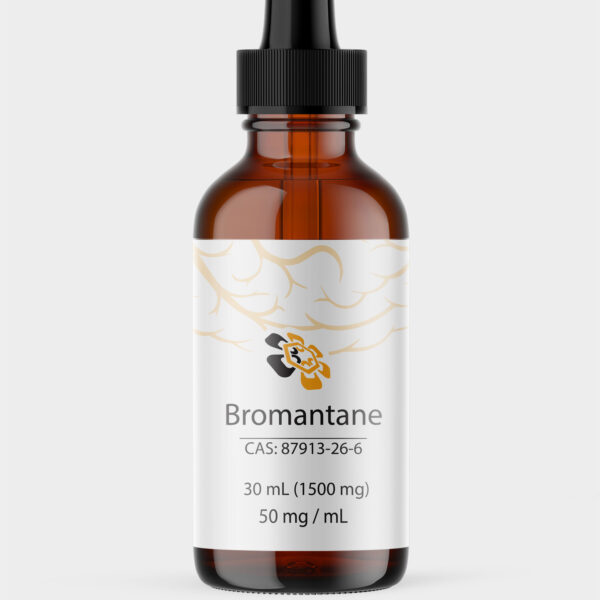

Coluracetam
From €27.80
Cyclazodone
From €54.80

Dihexa
From €87.11
F-Phenibut FAA
From €39.80
HA-966 HCl
From €49.80


NSI-189 Phosphate
From €29.80