Bromantane
From €34.90
Bromantane is a unique nootropic and adaptogenic compound known for its stimulating and anxiolytic effects. It enhances both physical and mental performance by modulating dopamine and serotonin levels, improving mood, reducing anxiety, and boosting endurance. Bromantane is also recognized for its role in increasing resilience to stress and fatigue.
For a more detailed description and lab analysis, please see the sections below.
In stock
Worldwide Delivery: We ship to most international destinations with tracked services.
Bromantane Powder: A Research Profile of the Russian-Origin Actoprotector
Bromantane (Ladasten; 4-bromo-N-(1-adamantyl)benzamide) — a synthetic adamantane derivative originally developed in the 1980s in Russia as an actoprotector.
Upregulates tyrosine hydroxylase (the rate-limiting enzyme in catecholamine biosynthesis), thereby enhancing endogenous dopaminergic and serotonergic synthesis. Also modulates GABAergic transmission and exhibits immunomodulatory properties.
Investigation of fatigue models, stress resilience, cognitive endurance, mood regulation, dopaminergic function, and neuroprotective pathways.
Research Significance: Why Bromantane Attracts Scientific Interest
Most psychostimulatory compounds operate via direct monoamine release or reuptake inhibition, producing acute synaptic flooding followed by depletion, tolerance, and withdrawal phenomena. Bromantane represents a mechanistically distinct alternative:
Rather than increasing neurotransmitter concentration acutely, Bromantane enhances the synthetic capacity of the dopaminergic system itself. By upregulating tyrosine hydroxylase — the enzyme converting L-tyrosine to L-DOPA, the direct precursor of dopamine — Bromantane expands the ceiling of endogenous dopamine production without causing receptor desensitization or transmitter depletion.
This upstream mechanism yields a gradual, self-limiting, and sustainable elevation in dopaminergic tone. Concurrently, Bromantane increases central serotonin synthesis and turnover, producing a balanced DA/5-HT modulation that is atypical among stimulant-class compounds. Additionally, its positive modulation of GABAergic transmission contributes to anxiolytic and stress-buffering effects that counterbalance dopaminergic activation.
This unique pharmacological signature — combining mild psychostimulation, anxiolysis, fatigue resistance, and immunostimulation — makes Bromantane a valuable tool for investigating integrated physiological responses to stress and performance demands.
Historical Context and Development
Bromantane was synthesized at the Institute of Biomedical Problems (Moscow, Russia) during the 1980s as part of a program focused on developing actoprotectors — substances that increase physical and cognitive performance under adverse conditions without the energy debt or overstimulation associated with classical stimulants.
Following successful animal trials, Bromantane was clinically approved in Russia for the treatment of:
- Asthenia (chronic fatigue syndrome)
- Depression with asthenic syndrome
- Neurasthenia and stress-related burnout
- Reduced physical tolerance in demanding environments
The compound has been studied in Russian cosmonauts, military personnel, and athletes for endurance and stress-adaptation research. It remains a prescription pharmaceutical in Russia and has gained increasing attention in international nootropic research communities.
Pharmacological Mechanism
1. Dopaminergic Pathway Enhancement
Bromantane’s most distinctive mechanism is the upregulation of tyrosine hydroxylase (TH) — the rate-limiting enzyme in dopamine biosynthesis. This effect:
- Increases the enzymatic capacity for L-DOPA production from L-tyrosine
- Expands the pool of available dopamine for release
- Does not cause neurotransmitter depletion or storage exhaustion
- Sustains efficacy without requiring escalating doses
Bromantane also modulates brain-derived neurotrophic factor (BDNF) expression in mesolimbic dopaminergic circuits, supporting neuronal viability and function.
2. Serotonergic Modulation
Bromantane enhances central serotonin synthesis and turnover, contributing to its anxiolytic and mood-stabilizing properties. This serotonergic component balances dopaminergic stimulation, producing a calm-focus state rather than classic stimulant agitation.
3. GABAergic Involvement
Bromantane potentiates GABAergic transmission, reinforcing inhibitory tone in the central nervous system. This activity likely underlies:
- Anxiolytic and stress-buffering effects
- Protection against overstimulation
- Seizure threshold elevation at therapeutic doses (theoretically)
4. Immunomodulatory Actions
Originally developed as an immunostimulant, Bromantane modulates cytokine production and enhances resistance to stress-induced immune suppression. This system-level effect may contribute secondarily to overall resilience and recovery.
Comparative Pharmacological Profile
| Feature | Classical Stimulants (e.g., Amphetamine) | Bromantane |
|---|---|---|
| Mechanism | Monoamine release / reuptake inhibition | TH upregulation, synthesis enhancement |
| Onset | Rapid (15–30 min) | Gradual (1–3 hours) |
| Duration | 4–6 hours | 6–12+ hours |
| Tolerance development | High | Minimal |
| Rebound / crash | Common | Rare |
| Anxiogenic potential | High | Low (anxiolytic instead) |
| Dopamine depletion | Yes, with chronic use | No |
| Abuse liability | High | Very low |
Known Pharmacological Effects in Preclinical Models
Summary based on published research and clinical literature (for scientific reference only).
Cognitive Performance
- Improved working memory in models of spatial navigation
- Enhanced attention and task-switching capability
- Increased resistance to cognitive fatigue during prolonged tasks
- Preserved executive function under stress conditions
Behavioral and Affective Measures
- Reduced immobility in forced-swim tests (antidepressant-like activity)
- Decreased anxiety-like behavior in elevated plus-maze models
- Enhanced stress-coping behavior in chronic stress paradigms
- Normalization of stress-induced behavioral deficits
Physical Performance and Fatigue
- Increased swimming endurance in rodent models
- Reduced lactate accumulation during exhaustive exercise
- Enhanced motor coordination under hypoxic conditions
- Accelerated recovery following acute exertion
Neurochemical and Molecular Effects
- Upregulation of tyrosine hydroxylase mRNA and protein expression
- Increased dopamine and serotonin concentrations in striatum and prefrontal cortex
- Elevated BDNF expression in hippocampus
- Modulation of cytokine profiles (IL-1β, TNF-α) under stress conditions
- Antioxidant and membrane-stabilizing properties
Research Protocols and Handling Guidelines
Concentration / Guideline Recommendations
| Research Paradigm | Suggested Concentration | Comments |
|---|---|---|
| Assess | 50–100 mg | Dose-response studies recommended |
| Standard | 100–200 mg | |
| High-Asthenia | 200–300 mg | Divided dosing; assess tolerance |
Key Methodological Considerations
- Gradual onset: Bromantane effects develop over 1–3 hours, requiring careful timing of behavioral assessments.
- Chronic administration: Receptor-independent mechanisms mean single-dose studies may underestimate effects; multi-day protocols (7–14 days) more accurately reflect pharmacological action.
- Timing of behavioral tests: Peak effects in rodents typically observed 2–4 hours post-administration.
- Vehicle selection: Bromantane is poorly water-soluble.
Preparation and Handling
Bromantane is a fine, off-white crystalline powder with limited aqueous solubility. It dissolves readily in organic solvents.
- Analytical balance required: Precision to 1 mg for reproducible dosing.
- Storage: Stock solutions at 4°C for up to 12 months. Powder remains stable for 24+ months when stored sealed, desiccated, away from light at ≤23°C.
Co-administration Considerations in Experimental Models
Compounds with Theoretical Synergism
- Choline precursors (Citicoline, Alpha-GPC): Complement dopaminergic effects with cholinergic support for cognitive paradigms.
- Racetams (Piracetam, Aniracetam): Different mechanistic class (AMPA modulation); may synergize in cognitive models.
- L-Theanine: Non-anxiogenic anxiolytic that may complement Bromantane’s stress-buffering effects.
- B-Complex vitamins (B6, B12, folate): Cofactors for neurotransmitter synthesis; enhanced TH activity may increase demand.
Interactions Requiring Caution
- Direct dopaminergic agonists or releasers: May produce additive hyperstimulation in animal models.
- Serotonergic agents (SSRIs, MAOIs): Bromantane’s serotonergic activity combined with MAOIs presents theoretical risk of serotonin excess; avoid in vivo co-administration.
- Antipsychotic compounds: Dopamine receptor antagonism may oppose Bromantane’s effects, confounding data interpretation.
- Classical stimulants: Combination studies may produce unpredictable behavioral outcomes.
Safety and Handling Considerations
Toxicological Profile
- Wide safety margin: LD50 in rodents exceeds 1000 mg/kg.
- Chronic tolerance: Not observed in long-term animal studies (3–6 months).
- Withdrawal: No physical dependence or discontinuation syndrome documented.
- Low abuse liability: No euphorigenic effect in standard conditioned place preference models.
Potential Observations (Typically Mild and Transient)
- Mild increase in locomotor activity during initial dosing
- Transient sleep architecture changes in nocturnal behavioral studies
- Decreased food intake during first few days of chronic protocols
- Occasional piloerection or salivation at high doses
Research Use Precautions
- Avoid in seizure-prone models until further characterization.
- Caution in cardiovascular studies: Monitor blood pressure in chronic protocols.
- Accidental human exposure: Use appropriate PPE (nitrile gloves, safety glasses, lab coat). If contact occurs, rinse thoroughly. Do not ingest.
Frequently Asked Research Questions
How does Bromantane compare to modafinil in research models?
Modafinil primarily inhibits dopamine reuptake and activates orexinergic pathways, producing a wakefulness-promoting effect without significant mood modulation. Bromantane enhances monoamine synthesis rather than reuptake, providing a more gradual, balanced elevation of DA and 5-HT. In behavioral models, Bromantane typically shows greater anxiolytic and stress-resilience effects, while modafinil shows more pronounced wakefulness promotion.
Are acute effects observable after single administration?
Behavioral effects are typically modest after single-dose administration. Bromantane’s mechanism (enzyme upregulation) requires repeated dosing (7–14 days) for full effect manifestation. This should be considered when designing experimental protocols; acute studies may underestimate the compound’s pharmacological potential.
Is there evidence of tolerance?
Unlike classical stimulants that induce receptor downregulation, Bromantane’s upstream synthetic mechanism does not produce tolerance. Long-term animal studies demonstrate sustained or increasing efficacy over 30–90 days without dose escalation. This positions Bromantane advantageously for chronic stress models.
Why does Bromantane produce a different behavioral profile than amphetamine?
Amphetamines release preformed dopamine stores, producing acute, intense stimulation with subsequent depletion. Bromantane expands the capacity for dopamine synthesis, producing a gradual, sustainable elevation. The serotonergic component also differentiates its behavioral profile, contributing to anxiolytic rather than anxiogenic effects.
Is Bromantane naturally occurring?
No. Bromantane is a fully synthetic adamantane derivative designed for pharmaceutical research. It shares structural features with adamantane compounds (e.g., amantadine, memantine) but has a distinct pharmacological profile focused on monoamine synthesis regulation.
Conclusion: Research Value and Potential Applications
Bromantane occupies a unique niche among psychoactive research compounds. As an actoprotector, it enhances both cognitive and physical performance without the energy debt, tolerance, or withdrawal characteristic of classical stimulants. Its dual dopaminergic and serotonergic modulation combined with GABAergic and immunomodulatory actions make it a multifaceted probe for investigating:
- Stress adaptation and resilience mechanisms
- Neurobiological basis of fatigue and burnout
- Dopamine synthesis regulation and tyrosine hydroxylase pharmacology
- Interactions between immune function and mood regulation
- Models of depression, anxiety, and chronic fatigue syndrome
Its gradual onset, absence of tolerance, and favorable safety profile make it particularly well-suited for chronic dosing studies examining long-term neuroadaptation.
⚠️ Important Legal & Regulatory Disclaimer
This compound is manufactured and supplied exclusively for laboratory research and analytical purposes. It is not intended for human or veterinary consumption, diagnostic use, or therapeutic application. Bromantane is a prescription pharmaceutical in the Russian Federation and is not FDA-approved for any indication.
This compound has not been evaluated by regulatory agencies for safety or efficacy in any biological system. All handling must be conducted by qualified personnel employing appropriate laboratory safety protocols, including the use of personal protective equipment.
The purchaser assumes all responsibility for compliance with applicable laws and regulations governing the possession, use, and disposal of research chemicals.
Lab analysis — Certificates of Analysis
Every batch is independently tested by HPLC/LC-MS. Purity for current lots: ≥98%. Select a lot to view the full report.
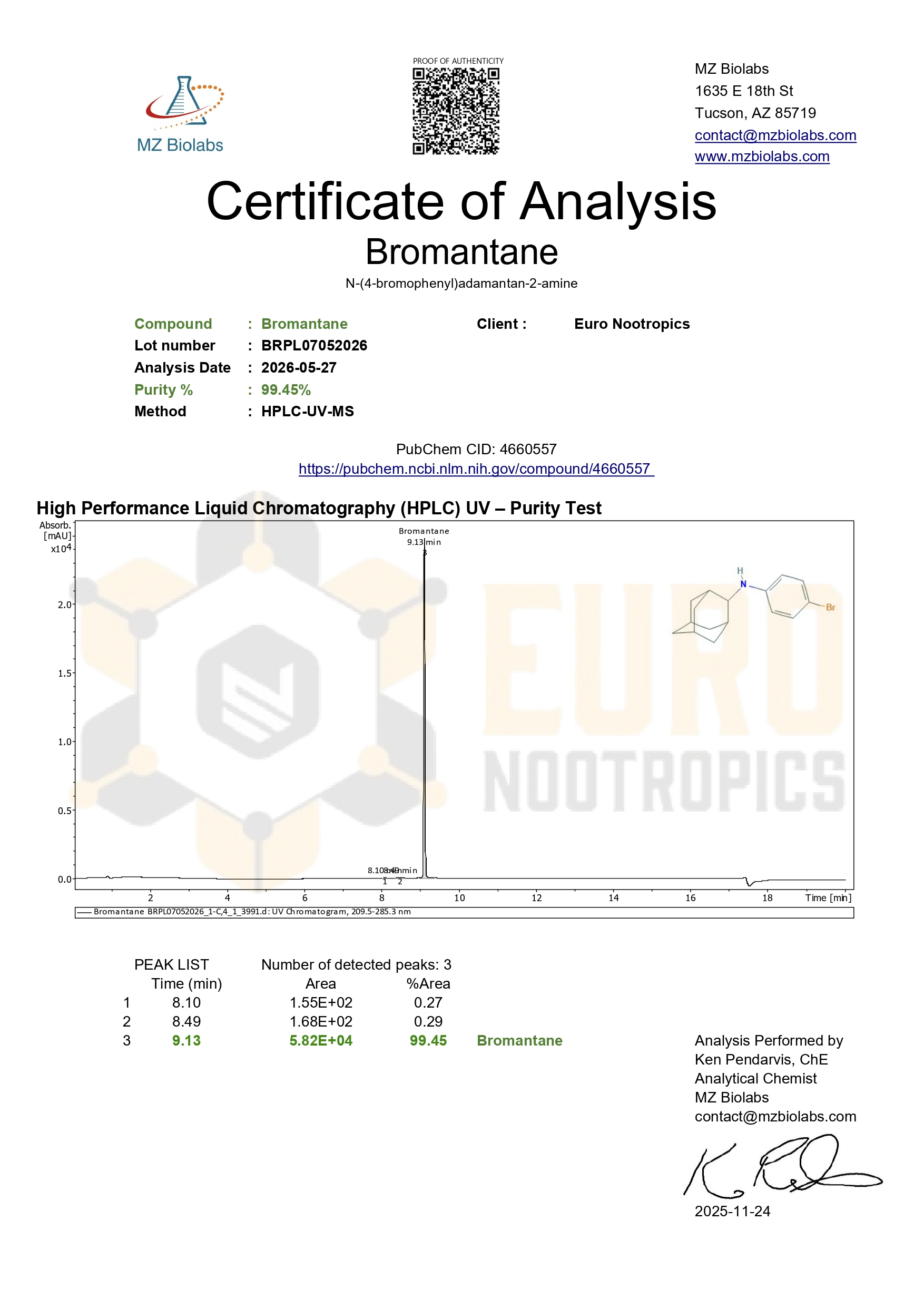
Chemical Informations
| Technical Information | |
|---|---|
| CAS Number | 87913-26-6 |
| PubChem CID | 4660557 |
| Purity | ≥98% |
| Molecular Weight | 306.247 g/mol |
| Molecular Formula | C₁₆H₂₀BrN |
| Melting Point | 105-107 °C |
| Synonyms | Ladasten, Bromantan, 2-(4-Bromophenyl)aminoadamantane, N-(2-adamantyl)-N-(p-bromophenyl)-amine, N-(4-Bromophenyl)tricyclo[3.3.1.1³,⁷]decan-2-amine |
| SMILES Notation | C1C2CC3CC1CC(C2)C3NC4=CC=C(C=C4)Br |
| Application | Bromantane is an atypical stimulant and anxiolytic with dopaminergic and possible serotonergic effects that produces additional immunomodulation. |
| Appearance | White powder |
| Physical State | Solid |
| Solubility | – Easily soluble in Acetone, Dioxane, Diethyl Ether, and Chloroform – Soluble in Hexane – Slightly soluble in Ethanol (produces toxic ethylbromides) – Insoluble in Water |
| Storage Conditions | Store at room temperature or cooler, in a sealed airtight container, protected from heat, light, and humidity. |
| Stability | Stable for at least two years when stored as above. |
Bromantane Powder: A Research Profile of the Russian-Origin Actoprotector
Bromantane (Ladasten; 4-bromo-N-(1-adamantyl)benzamide) — a synthetic adamantane derivative originally developed in the 1980s in Russia as an actoprotector.
Upregulates tyrosine hydroxylase (the rate-limiting enzyme in catecholamine biosynthesis), thereby enhancing endogenous dopaminergic and serotonergic synthesis. Also modulates GABAergic transmission and exhibits immunomodulatory properties.
Investigation of fatigue models, stress resilience, cognitive endurance, mood regulation, dopaminergic function, and neuroprotective pathways.
Research Significance: Why Bromantane Attracts Scientific Interest
Most psychostimulatory compounds operate via direct monoamine release or reuptake inhibition, producing acute synaptic flooding followed by depletion, tolerance, and withdrawal phenomena. Bromantane represents a mechanistically distinct alternative:
Rather than increasing neurotransmitter concentration acutely, Bromantane enhances the synthetic capacity of the dopaminergic system itself. By upregulating tyrosine hydroxylase — the enzyme converting L-tyrosine to L-DOPA, the direct precursor of dopamine — Bromantane expands the ceiling of endogenous dopamine production without causing receptor desensitization or transmitter depletion.
This upstream mechanism yields a gradual, self-limiting, and sustainable elevation in dopaminergic tone. Concurrently, Bromantane increases central serotonin synthesis and turnover, producing a balanced DA/5-HT modulation that is atypical among stimulant-class compounds. Additionally, its positive modulation of GABAergic transmission contributes to anxiolytic and stress-buffering effects that counterbalance dopaminergic activation.
This unique pharmacological signature — combining mild psychostimulation, anxiolysis, fatigue resistance, and immunostimulation — makes Bromantane a valuable tool for investigating integrated physiological responses to stress and performance demands.
Historical Context and Development
Bromantane was synthesized at the Institute of Biomedical Problems (Moscow, Russia) during the 1980s as part of a program focused on developing actoprotectors — substances that increase physical and cognitive performance under adverse conditions without the energy debt or overstimulation associated with classical stimulants.
Following successful animal trials, Bromantane was clinically approved in Russia for the treatment of:
- Asthenia (chronic fatigue syndrome)
- Depression with asthenic syndrome
- Neurasthenia and stress-related burnout
- Reduced physical tolerance in demanding environments
The compound has been studied in Russian cosmonauts, military personnel, and athletes for endurance and stress-adaptation research. It remains a prescription pharmaceutical in Russia and has gained increasing attention in international nootropic research communities.
Pharmacological Mechanism
1. Dopaminergic Pathway Enhancement
Bromantane’s most distinctive mechanism is the upregulation of tyrosine hydroxylase (TH) — the rate-limiting enzyme in dopamine biosynthesis. This effect:
- Increases the enzymatic capacity for L-DOPA production from L-tyrosine
- Expands the pool of available dopamine for release
- Does not cause neurotransmitter depletion or storage exhaustion
- Sustains efficacy without requiring escalating doses
Bromantane also modulates brain-derived neurotrophic factor (BDNF) expression in mesolimbic dopaminergic circuits, supporting neuronal viability and function.
2. Serotonergic Modulation
Bromantane enhances central serotonin synthesis and turnover, contributing to its anxiolytic and mood-stabilizing properties. This serotonergic component balances dopaminergic stimulation, producing a calm-focus state rather than classic stimulant agitation.
3. GABAergic Involvement
Bromantane potentiates GABAergic transmission, reinforcing inhibitory tone in the central nervous system. This activity likely underlies:
- Anxiolytic and stress-buffering effects
- Protection against overstimulation
- Seizure threshold elevation at therapeutic doses (theoretically)
4. Immunomodulatory Actions
Originally developed as an immunostimulant, Bromantane modulates cytokine production and enhances resistance to stress-induced immune suppression. This system-level effect may contribute secondarily to overall resilience and recovery.
Comparative Pharmacological Profile
| Feature | Classical Stimulants (e.g., Amphetamine) | Bromantane |
|---|---|---|
| Mechanism | Monoamine release / reuptake inhibition | TH upregulation, synthesis enhancement |
| Onset | Rapid (15–30 min) | Gradual (1–3 hours) |
| Duration | 4–6 hours | 6–12+ hours |
| Tolerance development | High | Minimal |
| Rebound / crash | Common | Rare |
| Anxiogenic potential | High | Low (anxiolytic instead) |
| Dopamine depletion | Yes, with chronic use | No |
| Abuse liability | High | Very low |
Known Pharmacological Effects in Preclinical Models
Summary based on published research and clinical literature (for scientific reference only).
Cognitive Performance
- Improved working memory in models of spatial navigation
- Enhanced attention and task-switching capability
- Increased resistance to cognitive fatigue during prolonged tasks
- Preserved executive function under stress conditions
Behavioral and Affective Measures
- Reduced immobility in forced-swim tests (antidepressant-like activity)
- Decreased anxiety-like behavior in elevated plus-maze models
- Enhanced stress-coping behavior in chronic stress paradigms
- Normalization of stress-induced behavioral deficits
Physical Performance and Fatigue
- Increased swimming endurance in rodent models
- Reduced lactate accumulation during exhaustive exercise
- Enhanced motor coordination under hypoxic conditions
- Accelerated recovery following acute exertion
Neurochemical and Molecular Effects
- Upregulation of tyrosine hydroxylase mRNA and protein expression
- Increased dopamine and serotonin concentrations in striatum and prefrontal cortex
- Elevated BDNF expression in hippocampus
- Modulation of cytokine profiles (IL-1β, TNF-α) under stress conditions
- Antioxidant and membrane-stabilizing properties
Research Protocols and Handling Guidelines
Concentration / Guideline Recommendations
| Research Paradigm | Suggested Concentration | Comments |
|---|---|---|
| Assess | 50–100 mg | Dose-response studies recommended |
| Standard | 100–200 mg | |
| High-Asthenia | 200–300 mg | Divided dosing; assess tolerance |
Key Methodological Considerations
- Gradual onset: Bromantane effects develop over 1–3 hours, requiring careful timing of behavioral assessments.
- Chronic administration: Receptor-independent mechanisms mean single-dose studies may underestimate effects; multi-day protocols (7–14 days) more accurately reflect pharmacological action.
- Timing of behavioral tests: Peak effects in rodents typically observed 2–4 hours post-administration.
- Vehicle selection: Bromantane is poorly water-soluble.
Preparation and Handling
Bromantane is a fine, off-white crystalline powder with limited aqueous solubility. It dissolves readily in organic solvents.
- Analytical balance required: Precision to 1 mg for reproducible dosing.
- Storage: Stock solutions at 4°C for up to 12 months. Powder remains stable for 24+ months when stored sealed, desiccated, away from light at ≤23°C.
Co-administration Considerations in Experimental Models
Compounds with Theoretical Synergism
- Choline precursors (Citicoline, Alpha-GPC): Complement dopaminergic effects with cholinergic support for cognitive paradigms.
- Racetams (Piracetam, Aniracetam): Different mechanistic class (AMPA modulation); may synergize in cognitive models.
- L-Theanine: Non-anxiogenic anxiolytic that may complement Bromantane’s stress-buffering effects.
- B-Complex vitamins (B6, B12, folate): Cofactors for neurotransmitter synthesis; enhanced TH activity may increase demand.
Interactions Requiring Caution
- Direct dopaminergic agonists or releasers: May produce additive hyperstimulation in animal models.
- Serotonergic agents (SSRIs, MAOIs): Bromantane’s serotonergic activity combined with MAOIs presents theoretical risk of serotonin excess; avoid in vivo co-administration.
- Antipsychotic compounds: Dopamine receptor antagonism may oppose Bromantane’s effects, confounding data interpretation.
- Classical stimulants: Combination studies may produce unpredictable behavioral outcomes.
Safety and Handling Considerations
Toxicological Profile
- Wide safety margin: LD50 in rodents exceeds 1000 mg/kg.
- Chronic tolerance: Not observed in long-term animal studies (3–6 months).
- Withdrawal: No physical dependence or discontinuation syndrome documented.
- Low abuse liability: No euphorigenic effect in standard conditioned place preference models.
Potential Observations (Typically Mild and Transient)
- Mild increase in locomotor activity during initial dosing
- Transient sleep architecture changes in nocturnal behavioral studies
- Decreased food intake during first few days of chronic protocols
- Occasional piloerection or salivation at high doses
Research Use Precautions
- Avoid in seizure-prone models until further characterization.
- Caution in cardiovascular studies: Monitor blood pressure in chronic protocols.
- Accidental human exposure: Use appropriate PPE (nitrile gloves, safety glasses, lab coat). If contact occurs, rinse thoroughly. Do not ingest.
Frequently Asked Research Questions
How does Bromantane compare to modafinil in research models?
Modafinil primarily inhibits dopamine reuptake and activates orexinergic pathways, producing a wakefulness-promoting effect without significant mood modulation. Bromantane enhances monoamine synthesis rather than reuptake, providing a more gradual, balanced elevation of DA and 5-HT. In behavioral models, Bromantane typically shows greater anxiolytic and stress-resilience effects, while modafinil shows more pronounced wakefulness promotion.
Are acute effects observable after single administration?
Behavioral effects are typically modest after single-dose administration. Bromantane’s mechanism (enzyme upregulation) requires repeated dosing (7–14 days) for full effect manifestation. This should be considered when designing experimental protocols; acute studies may underestimate the compound’s pharmacological potential.
Is there evidence of tolerance?
Unlike classical stimulants that induce receptor downregulation, Bromantane’s upstream synthetic mechanism does not produce tolerance. Long-term animal studies demonstrate sustained or increasing efficacy over 30–90 days without dose escalation. This positions Bromantane advantageously for chronic stress models.
Why does Bromantane produce a different behavioral profile than amphetamine?
Amphetamines release preformed dopamine stores, producing acute, intense stimulation with subsequent depletion. Bromantane expands the capacity for dopamine synthesis, producing a gradual, sustainable elevation. The serotonergic component also differentiates its behavioral profile, contributing to anxiolytic rather than anxiogenic effects.
Is Bromantane naturally occurring?
No. Bromantane is a fully synthetic adamantane derivative designed for pharmaceutical research. It shares structural features with adamantane compounds (e.g., amantadine, memantine) but has a distinct pharmacological profile focused on monoamine synthesis regulation.
Conclusion: Research Value and Potential Applications
Bromantane occupies a unique niche among psychoactive research compounds. As an actoprotector, it enhances both cognitive and physical performance without the energy debt, tolerance, or withdrawal characteristic of classical stimulants. Its dual dopaminergic and serotonergic modulation combined with GABAergic and immunomodulatory actions make it a multifaceted probe for investigating:
- Stress adaptation and resilience mechanisms
- Neurobiological basis of fatigue and burnout
- Dopamine synthesis regulation and tyrosine hydroxylase pharmacology
- Interactions between immune function and mood regulation
- Models of depression, anxiety, and chronic fatigue syndrome
Its gradual onset, absence of tolerance, and favorable safety profile make it particularly well-suited for chronic dosing studies examining long-term neuroadaptation.
⚠️ Important Legal & Regulatory Disclaimer
This compound is manufactured and supplied exclusively for laboratory research and analytical purposes. It is not intended for human or veterinary consumption, diagnostic use, or therapeutic application. Bromantane is a prescription pharmaceutical in the Russian Federation and is not FDA-approved for any indication.
This compound has not been evaluated by regulatory agencies for safety or efficacy in any biological system. All handling must be conducted by qualified personnel employing appropriate laboratory safety protocols, including the use of personal protective equipment.
The purchaser assumes all responsibility for compliance with applicable laws and regulations governing the possession, use, and disposal of research chemicals.
Lab analysis — Certificates of Analysis
Every batch is independently tested by HPLC/LC-MS. Purity for current lots: ≥98%. Select a lot to view the full report.
Chemical Informations
| Technical Information | |
|---|---|
| CAS Number | 87913-26-6 |
| PubChem CID | 4660557 |
| Purity | ≥98% |
| Molecular Weight | 306.247 g/mol |
| Molecular Formula | C₁₆H₂₀BrN |
| Melting Point | 105-107 °C |
| Synonyms | Ladasten, Bromantan, 2-(4-Bromophenyl)aminoadamantane, N-(2-adamantyl)-N-(p-bromophenyl)-amine, N-(4-Bromophenyl)tricyclo[3.3.1.1³,⁷]decan-2-amine |
| SMILES Notation | C1C2CC3CC1CC(C2)C3NC4=CC=C(C=C4)Br |
| Application | Bromantane is an atypical stimulant and anxiolytic with dopaminergic and possible serotonergic effects that produces additional immunomodulation. |
| Appearance | White powder |
| Physical State | Solid |
| Solubility | – Easily soluble in Acetone, Dioxane, Diethyl Ether, and Chloroform – Soluble in Hexane – Slightly soluble in Ethanol (produces toxic ethylbromides) – Insoluble in Water |
| Storage Conditions | Store at room temperature or cooler, in a sealed airtight container, protected from heat, light, and humidity. |
| Stability | Stable for at least two years when stored as above. |
Related products

9-me-bc
From €49.90
Bemethyl HBr
From €94.80
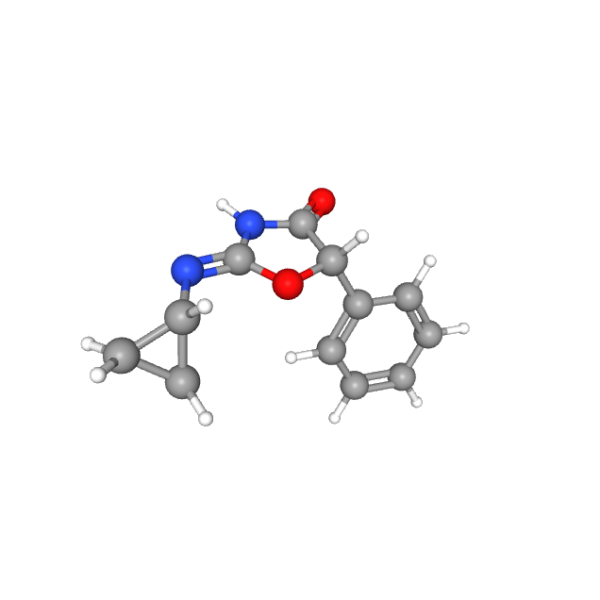
Cyclazodone
From €54.80
GTS-21 HCL
From €87.80
HBT1
From €69.80
Nooglutyl
From €28.40


NSI-189 Phosphate
From €29.80